Showing posts with label Nam Dok Mai. Show all posts

Saturday, December 12, 2015

New Addition to My Rooftop Container Garden 2015

Life has been hectic these couple of months. I am having several translation projects and ministries at church. My mind is crowded that it's hard for me to  just relax and let ideas to flow out, though I have some posts planned but not yet written down. Allow me to just briefly share some new addition to my rooftop container garden...


Chokanan Mango
Last month, I bought a small grafted Chokanan tree, a variety of Thai Mango(also found in Bangladesh, Pakistan & India). Earlier I have already had Nam Dok Mai(some call it 'Lok Mai') mango tree, that is fruiting now the third time this year. This new tree is only $1.20. I have re-potted it but still to a 4 gallon container and I planned to let it grow for a while, before re-potting it to its final container.


This is a green 'Honey' Bell fruit tree
At the same time I also bought this Honey Bell Fruit grafted tree. This one is less than US$ 1. This one is the green variety. It's a local cultivated variety.


Below are orange seedlings I planted by seed. These are of the Australian orange variety I bought from the supermarket. They need to be re-potted soon too, as orange trees usually have a ferocious appetite
.


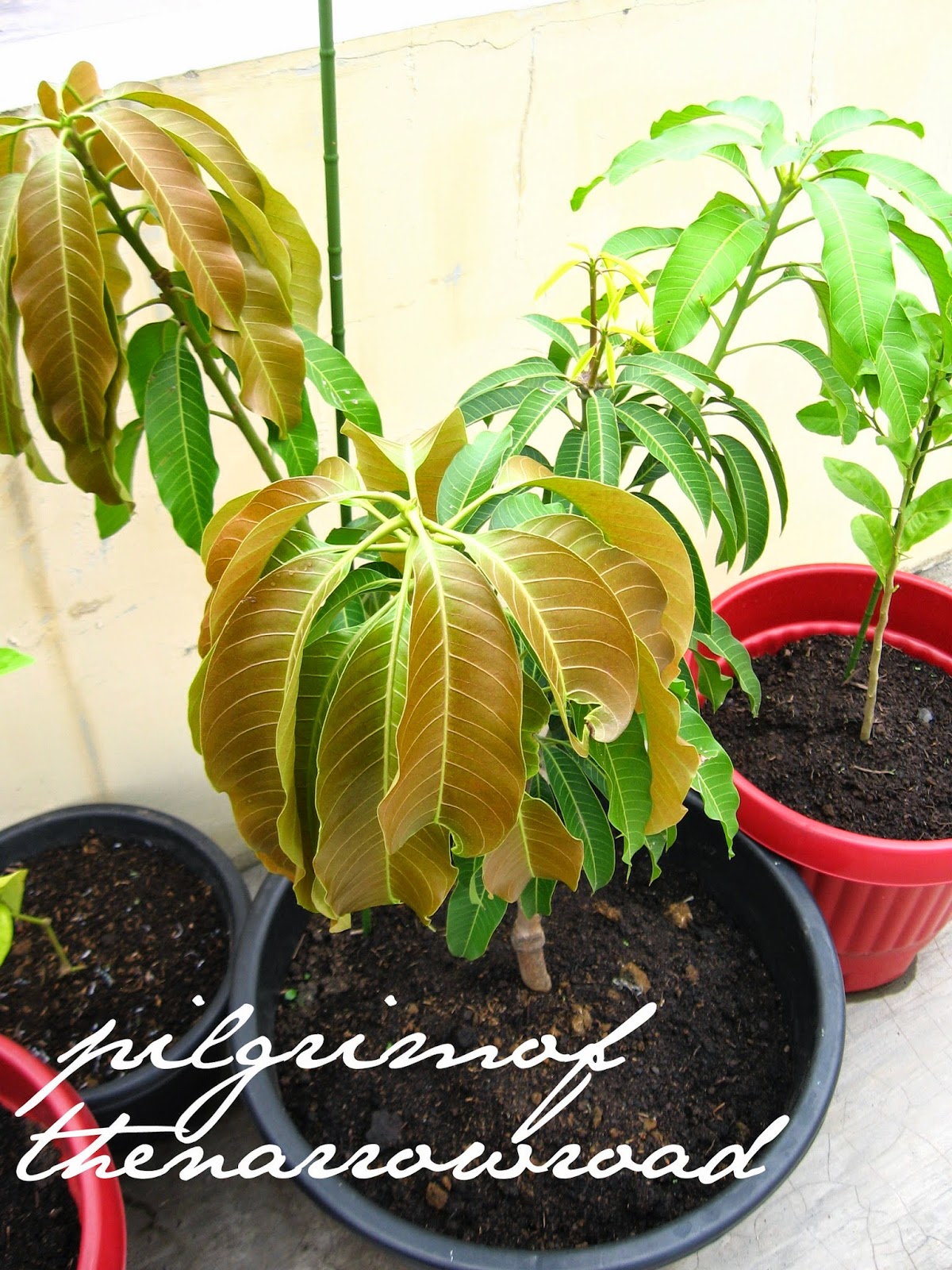
Remember the Nam Dok Mai seedling I planted from seed? Yes, this is how it looks now. And yes, I need to re-pot this one a.s.a.p too! And I also need to weed my plants, they have overgrown! Grrr...

Tuesday, July 7, 2015

Harvest Nam Dok Mai Mango


Nothing can compare to a fully-ripened, organic-grown fruit! 

I am very satisfied with my Nam Dok Mai Mango tree! This is it's first debut and it has born 14 fruits! I have harvested 4 of them so far. And they are all satisfactorily sweet and juicy!


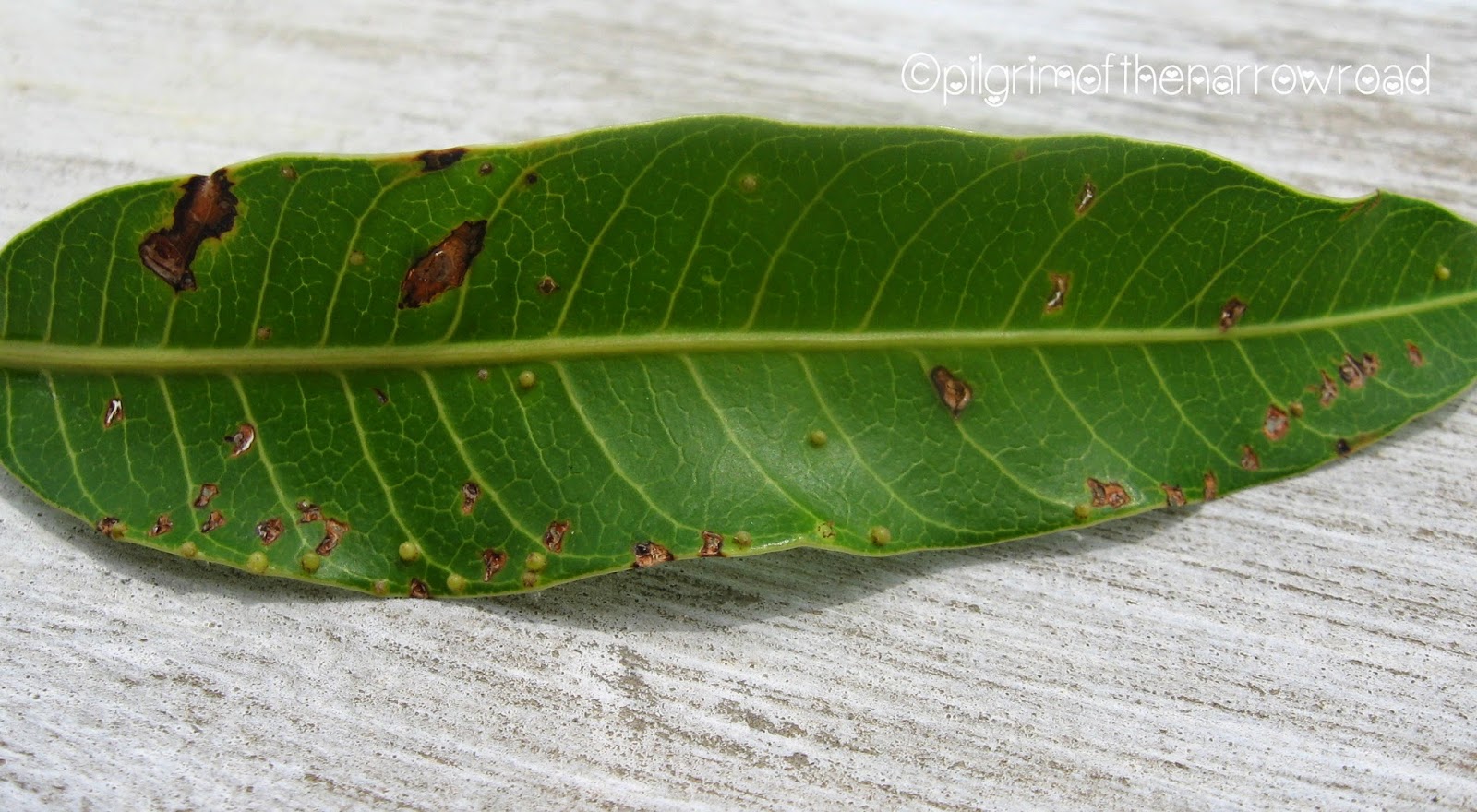
In my previous post on my Nam Dok Mai Mango Tree I said that my tree suffers from leaf gall midge disease, which was contracted while it was still in the nursery. Midges are very small flies in 1-2 mm in length. They lay eggs into the tissue of young leaves, leaving a small reddish spot which becomes swollen and soft, where the gall formation begins within 7 days and attains a diameter of 3-4 mm. Adults usually emerge from the underside of the leaf, leaving the pupal skin protruding from the emergence hole. The galls on the mango leaves will result in reduced photosynthesis, leading to leaf drop and lowered fruit production. Younger trees may die while older trees fail to recover normal growth after repeated attack. There are no examples of eradication of the insect anywhere in the world.


I experimented with my only organic way of eradicating this pest. It's only by poking the wart-like galls and then using a sharp object, usually my shears, I pierce through the spot, leaving a small hole.
My main purpose is to kill the insect in the pupal stage in order to prevent it from growing mature and infesting the whole tree. And so far I am successful! Of course this wouldn't be easy for mango trees grown in ground, as it can reach heights of 6 m or more but for container-grown trees this way is sufficient.


I don't encase the fruit with plastic bag this time, and so far my mango fruit are growing healthy and not attacked by fruit flies.


Sunday, June 7, 2015

Mango Pickles

Hey, I remember my promise to share my recipe of mango pickle. 
As I have shared in my previous post, I had more than 12 Nam Dok Mai mangoes, dropped due to over-stimulation from liquid fertilizer I applied after fruiting. The application of the liquid fertilizer stimulated new growth of branches and and flowers, and caused the pollinated fruits to compete for food and had to finally succumb. Only 4 remain in tact and still growing.


Most of the dropped mangoes is this size or around 8 cm long. In case you have immature fruit drop like these, don't toss them away to your compost pile, instead, recycle them into a delicious simple pickle!


All you have to do is :

1. Wash and peel the rinds.


2. Slice thinly like the picture below. 


3. After that, rub the mango slices with 1-2 Tbs salt. Refrigerate for 30 minutes until the fluid drains and the mango flesh shrink in size. Then, wash the salt away. 

 4. Now you are ready to season it with 2-3 Tbs vinegar/apple cider vinegar, 3-4 Tbs sugar, 3 red chili (sliced). Mix it well. Refrigerate it half to one day before serving. It's yummy and crunchy! 

Sunday, April 19, 2015

Should I Be Happy of Sad?


Remember my Nam Dok Mai mango tree? 
It started to flower last February and I saw about 20-something baby mangoes were in the making


In no time, they were growing into this size.
 I was starting to imagine the great harvest this season, 
but the proverb that says, 'Don't count your chicken before they hatched' was proved to be true for me because...


 I did a HUGE mistake ever! 
I was being too ambitious and sprayed some liquid fertilizer 
to the tree. As the result: new shoots were coming out and 
competed with the growing fruit for nutrients and water,
 and caused premature fruit drop! From the 20-something fruit, only 5 survived and are still growing.


 These are some premature fruit that drop from about 12-14 with sizes ranging from 3-8 cm long. Rather than letting them go to waste, I turned them into pickles which recipe will be shared in another post. Well, I learned my lesson hardly this time!


Tuesday, November 4, 2014

Nam Dok Mai Manggo Tree

Mango is one of my favorite fruit. The privilege of living in a tropical country like Indonesia means that I can enjoy mango in season every twice a year! We have many varieties, with various shape, fragrance, texture and taste. 

Recently I have become very obsessed with planting mango trees besides citrus! Ever since I started gardening, mango tree has been in my top planting list. Last year I bought a local variety called Harum Manis (literally translated into Sweet & Fragrant) from a local nursery. It was still a small plant but they told me it was grafted. Garden enthusiasts usually like to buy grafted fruit trees in pots because it is much more practical and success guaranteed. 

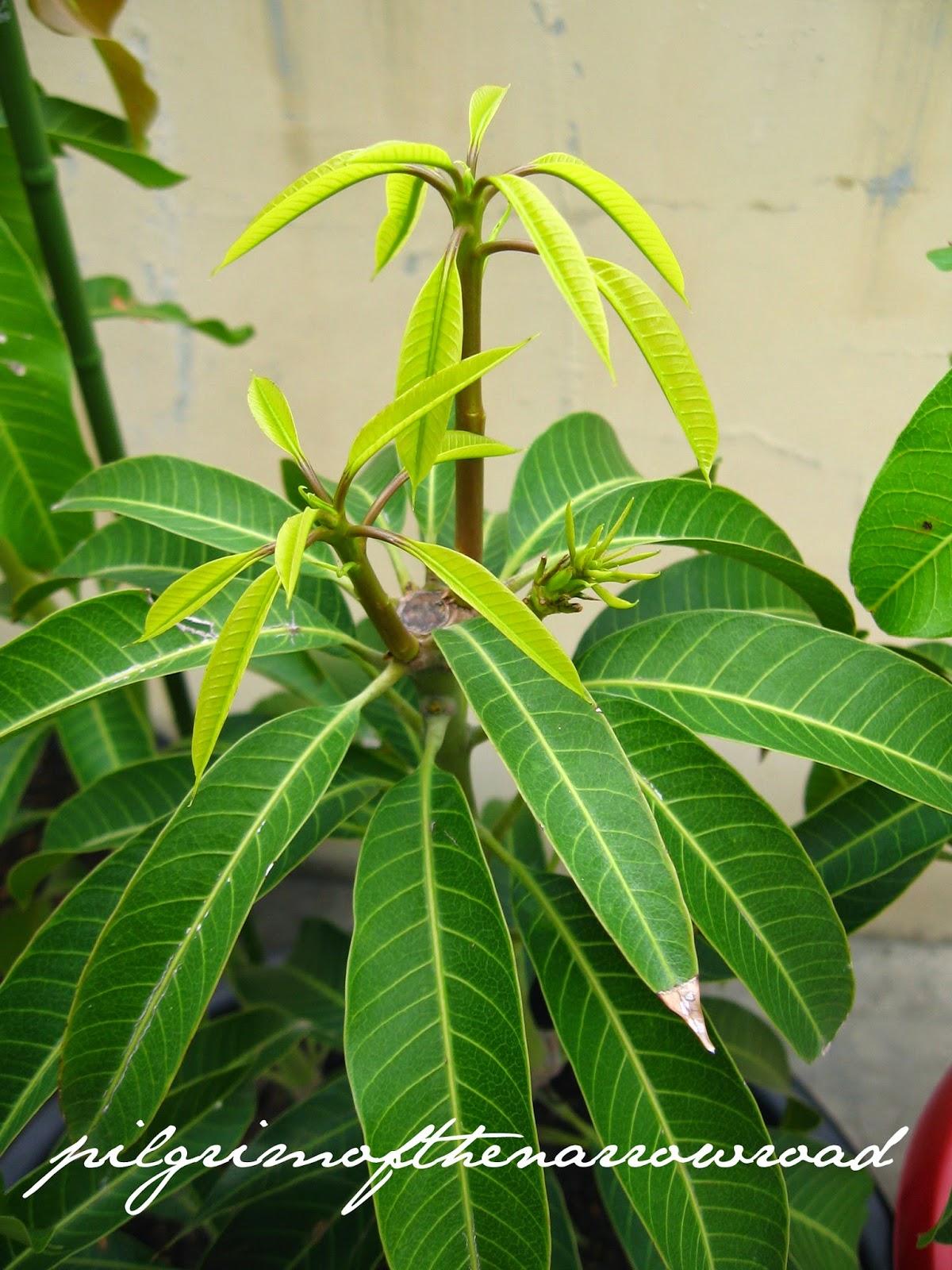
After my first success with Harum Manis, this year I added a Thai variety into my collection: Please meet Nam Dok Mai! 

Nam Dok Mai is famous for its characteristics of thick flesh and small seed. When it's ripen it will be sweet smelling and the peels golden yellow.


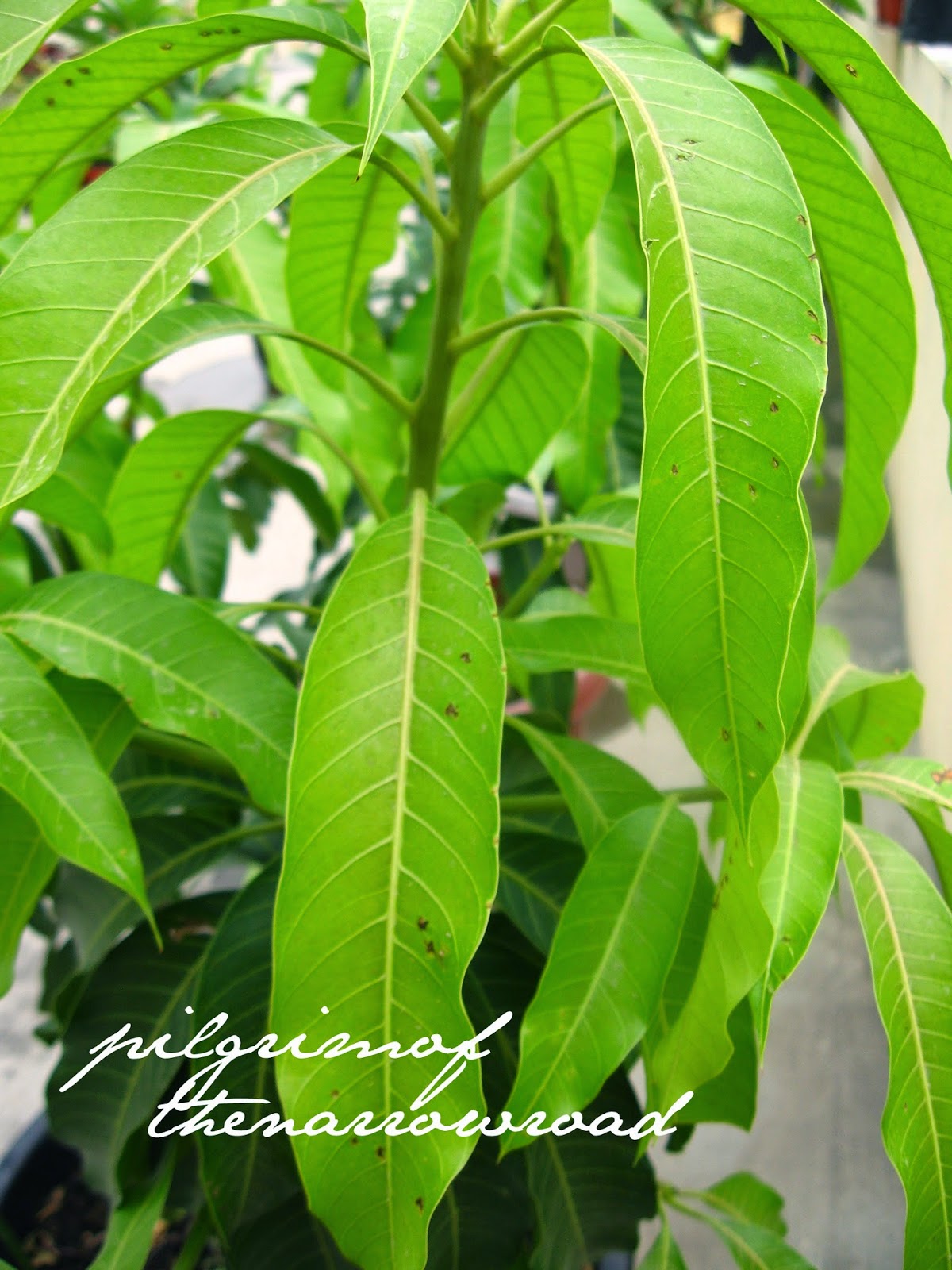
There's one thing I should warn you when buying mango trees in pots from any nursery, you should be careful to inspect the tree prior to purchase because plants in the nursery are prone to pests and diseases. Just like my experience with this tree. When I bought it I had spotted some brown spots or bumps on the leaves. I thought, by cutting the contracted leaves off would solve the problem, but it didn't. Every other day, I find new leaves with these spots/bumps, mostly on younger leaves. These spots/bumps are actually caused by the mango leaf gall midge (Procontarinia Matteiana), also called mango leaf curl midge. It can cause yield loss up to 70% and low quality fruit. Mango leaf curl midge lay eggs into the leaf tissue that softens and blisters. The spots become red and galls form shortly in 7 days. The galls grow up to a size of 3-4 mm. When matures, the adult galls emerge from the lower side of the leaves. 
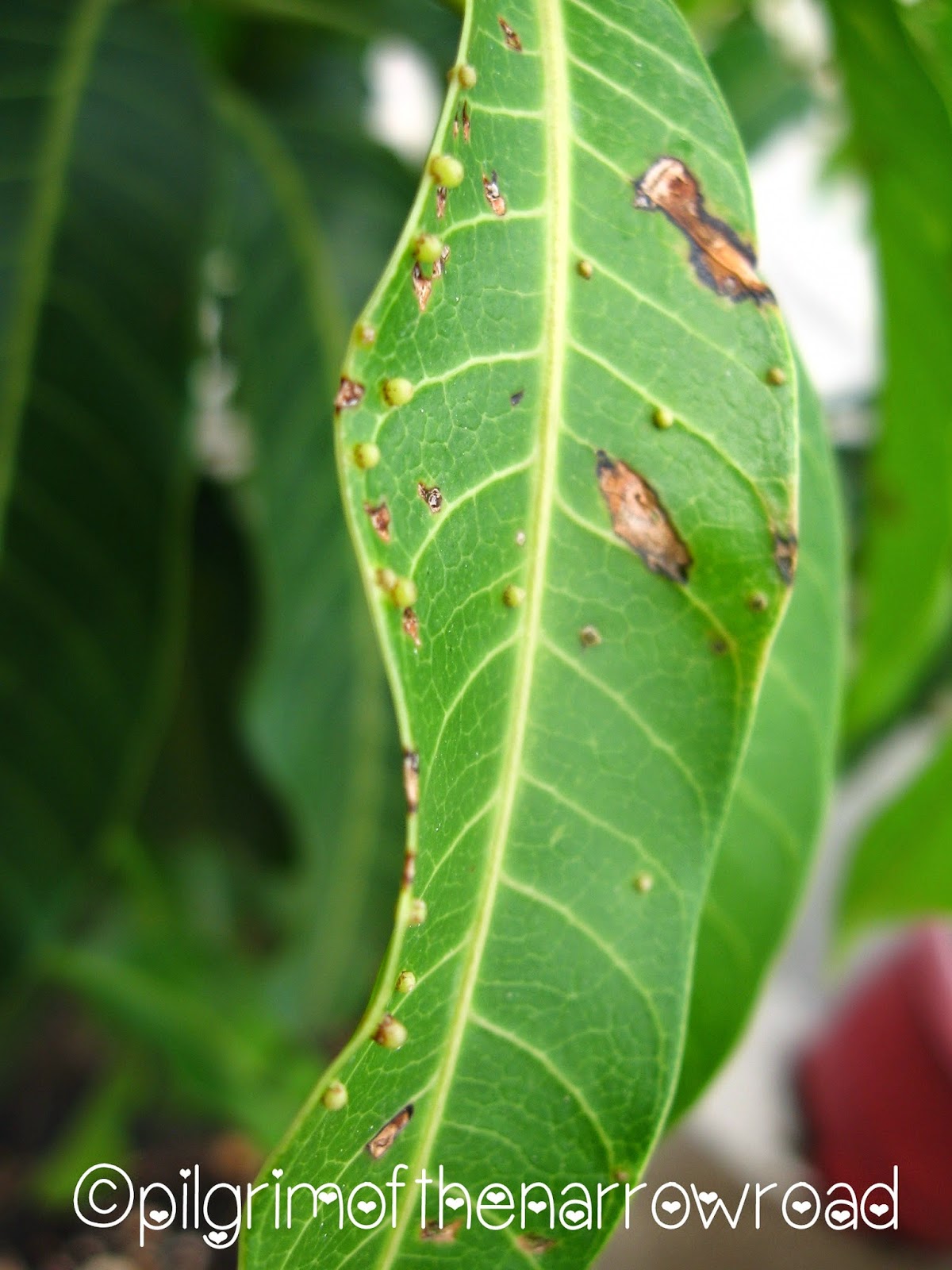


To control this pest, we can prune the highly infested leaves and burn them and clean the tree floor off the infested leaves to avoid the insects move into the soil and pupate. Ploughing the orchard to expose the pupae to sun so it will die. As for botanical control we can mix 30 ml neem oil with 1 ltr of soapy water, shake well and spray. 

You may notice that the leaves have holes in it as the result of my piercing the spots/ galls before the spots/galls turn into insect. But I don't suggest this to you since it will reduce the leaf photosintetic area and affect the tree growth.


Related Posts Plugin for WordPress, Blogger...