Showing posts with label Mango Tree. Show all posts

Thursday, September 17, 2015

How to Plant Mango From Seed Part II

I want to make an update to my earlier post on how to plant mango from seed.
On that post I suggested to let the seed sits near the windowsill for about 2-3 weeks(from the information I got from Wikihow) to dry before we crack it open to release the kernel and plant it. Through my experience, this is not always the best idea,'cause the kernel has higher possibility to dry up inside or spoiled during that process, even when we only put it to dry in room temperature(away from the windowsill/sunlight).

I recently made a new experiment by cracking open the seed(of mango fruit that is stored in room temperature, the kernel of the refrigerated one tends to be spoiled) to expose the kernel, once the flesh has been eaten. As you can see below, the kernel is still at its best condition and fresh. Then I soak the kernel for about 12 hours before I planted it outside under the sun, in a germinating pot. But once it sprouted, I moved it under the shade in order to protect the young leaves.


Then after the the second layer of leaves came out, I bring the plant inside and place it under my reading lamp until the leaves wholly developed.
The seedling is growing well. The the third and fourth layer of leaves have come out but I will wait a little longer before I transplant it to its permanent home.


Sunday, April 19, 2015

My Arum Manis Mango Tree after Repotting


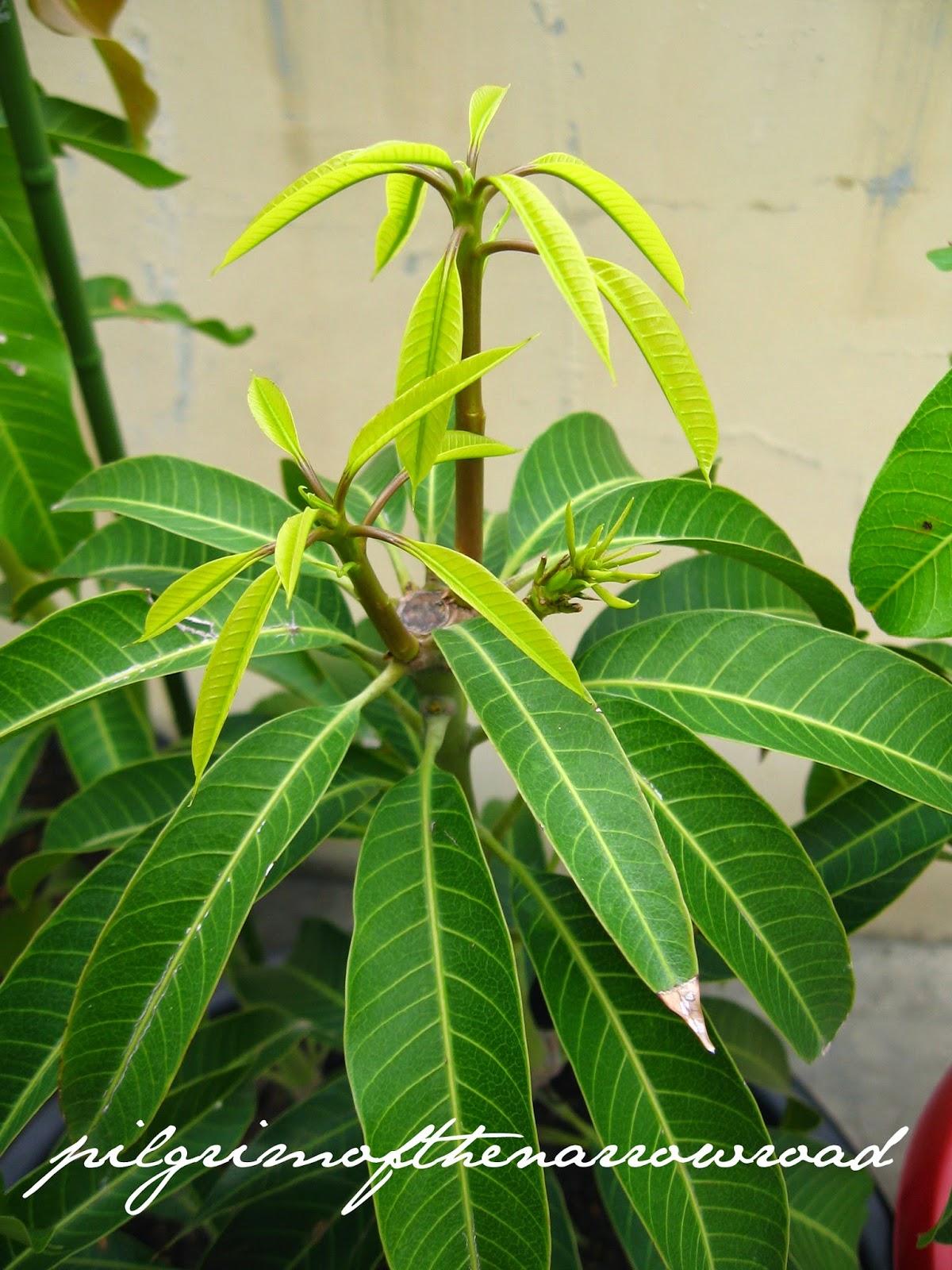
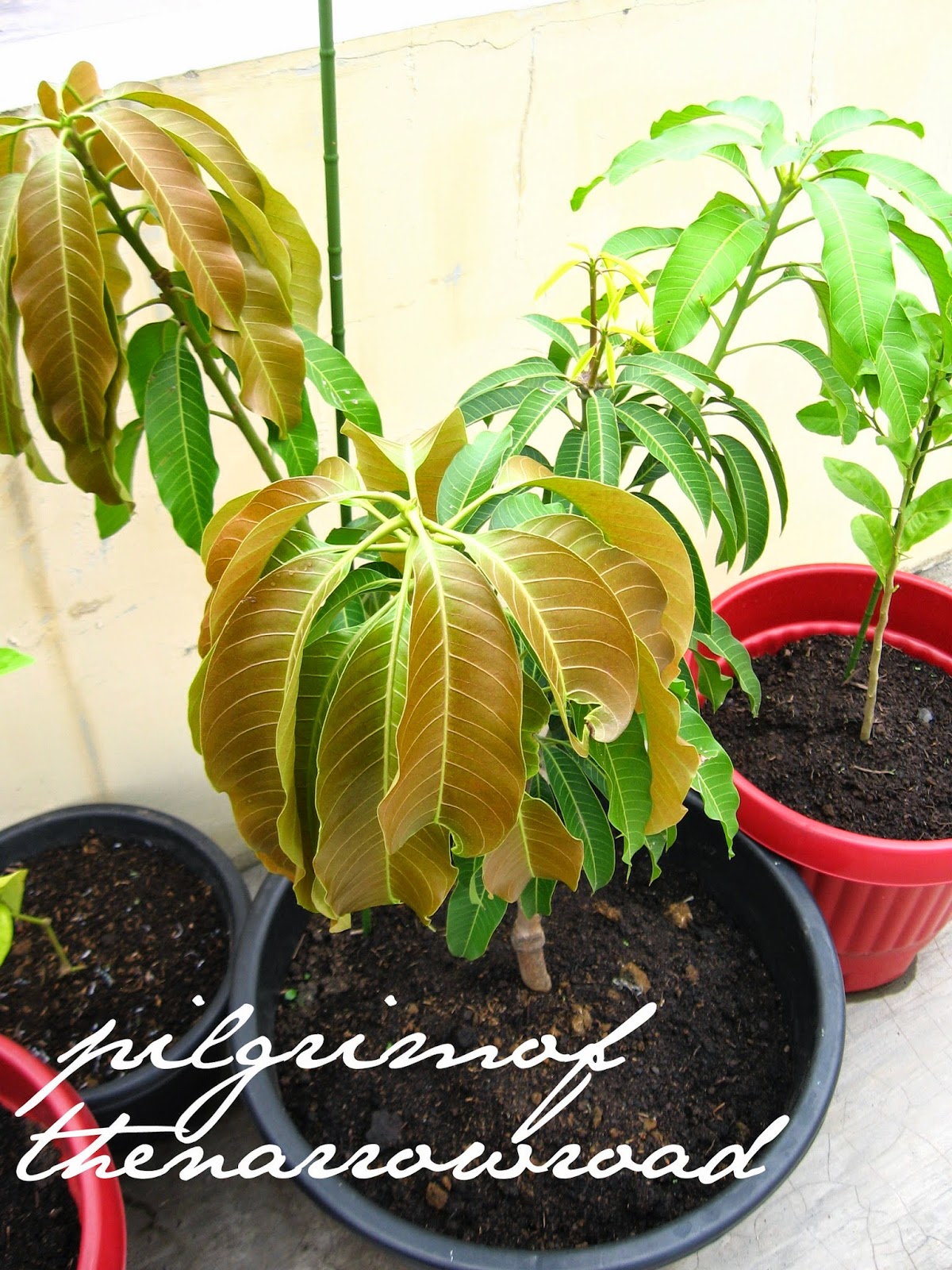
These are the first stage of my Arum Manis mango tree after repotting. Besides applying compost and cow manure, I also sprayed the tree with organic liquid fertilizer to boost the growth of new shoots. And just within weeks new shoots were coming out.


It keeps growing taller and denser each day. And this spring, it has started to flower and fuit again for the second season. And I need to be very careful with the watering this time, as I tend to overwater last season, which made some of the fruit to burst.


Should I Be Happy of Sad?


Remember my Nam Dok Mai mango tree? 
It started to flower last February and I saw about 20-something baby mangoes were in the making


In no time, they were growing into this size.
 I was starting to imagine the great harvest this season, 
but the proverb that says, 'Don't count your chicken before they hatched' was proved to be true for me because...


 I did a HUGE mistake ever! 
I was being too ambitious and sprayed some liquid fertilizer 
to the tree. As the result: new shoots were coming out and 
competed with the growing fruit for nutrients and water,
 and caused premature fruit drop! From the 20-something fruit, only 5 survived and are still growing.


 These are some premature fruit that drop from about 12-14 with sizes ranging from 3-8 cm long. Rather than letting them go to waste, I turned them into pickles which recipe will be shared in another post. Well, I learned my lesson hardly this time!


Monday, December 1, 2014

Repotting Mango Tree


After the first fruiting success, I repotted this mango 'Arum Manis' plant into a much bigger pot end of last October. 
It needs more space and energy to grow.


Just within the first couple of weeks, it started to send new shoots.


In our tropical weather, normally mango tree produces fruit twice a year. Thus, I'm waiting in anticipation to new fruting season. I'm not really sure when, maybe around december.


Tuesday, November 4, 2014

Nam Dok Mai Manggo Tree

Mango is one of my favorite fruit. The privilege of living in a tropical country like Indonesia means that I can enjoy mango in season every twice a year! We have many varieties, with various shape, fragrance, texture and taste. 

Recently I have become very obsessed with planting mango trees besides citrus! Ever since I started gardening, mango tree has been in my top planting list. Last year I bought a local variety called Harum Manis (literally translated into Sweet & Fragrant) from a local nursery. It was still a small plant but they told me it was grafted. Garden enthusiasts usually like to buy grafted fruit trees in pots because it is much more practical and success guaranteed. 

After my first success with Harum Manis, this year I added a Thai variety into my collection: Please meet Nam Dok Mai! 

Nam Dok Mai is famous for its characteristics of thick flesh and small seed. When it's ripen it will be sweet smelling and the peels golden yellow.


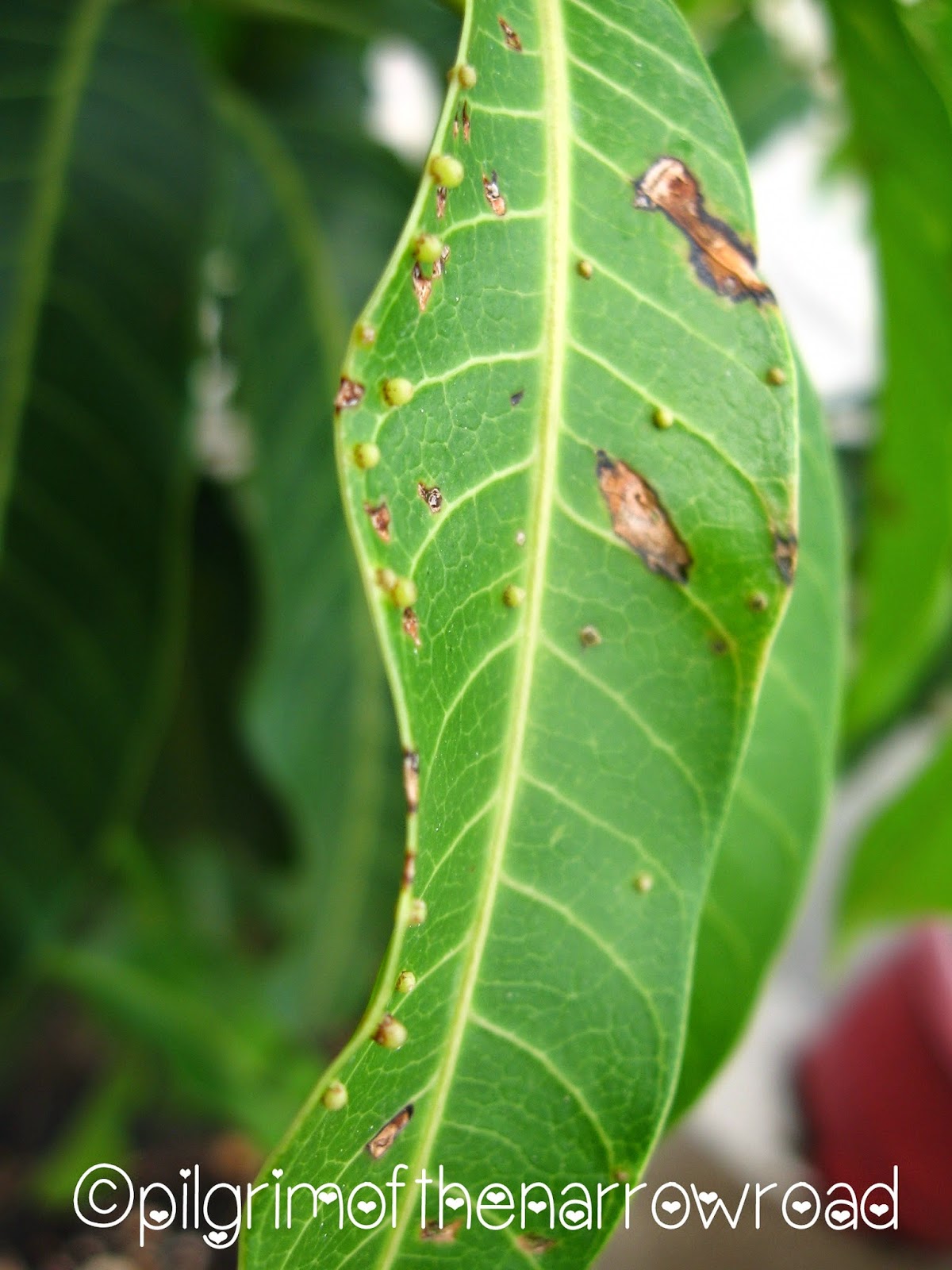
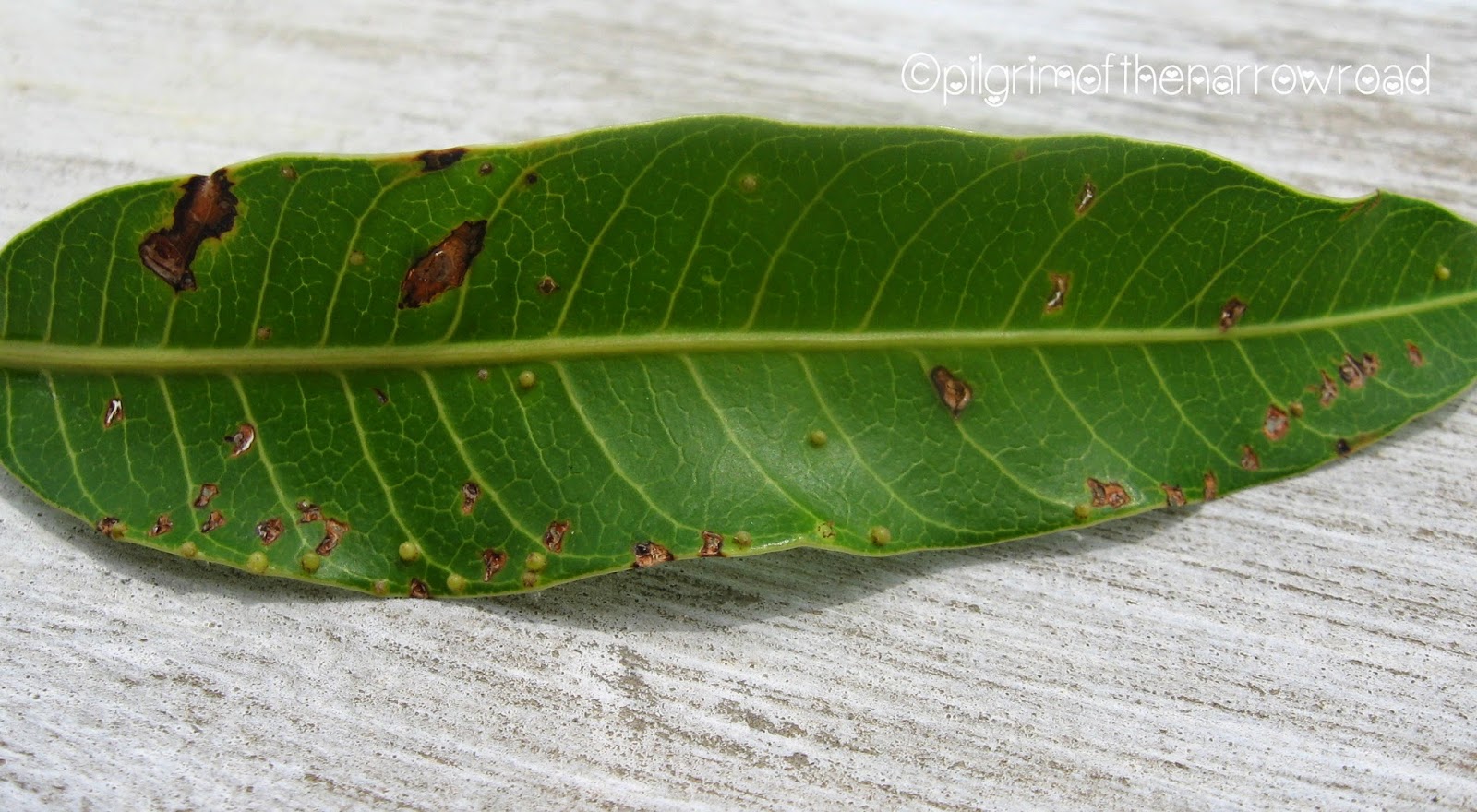
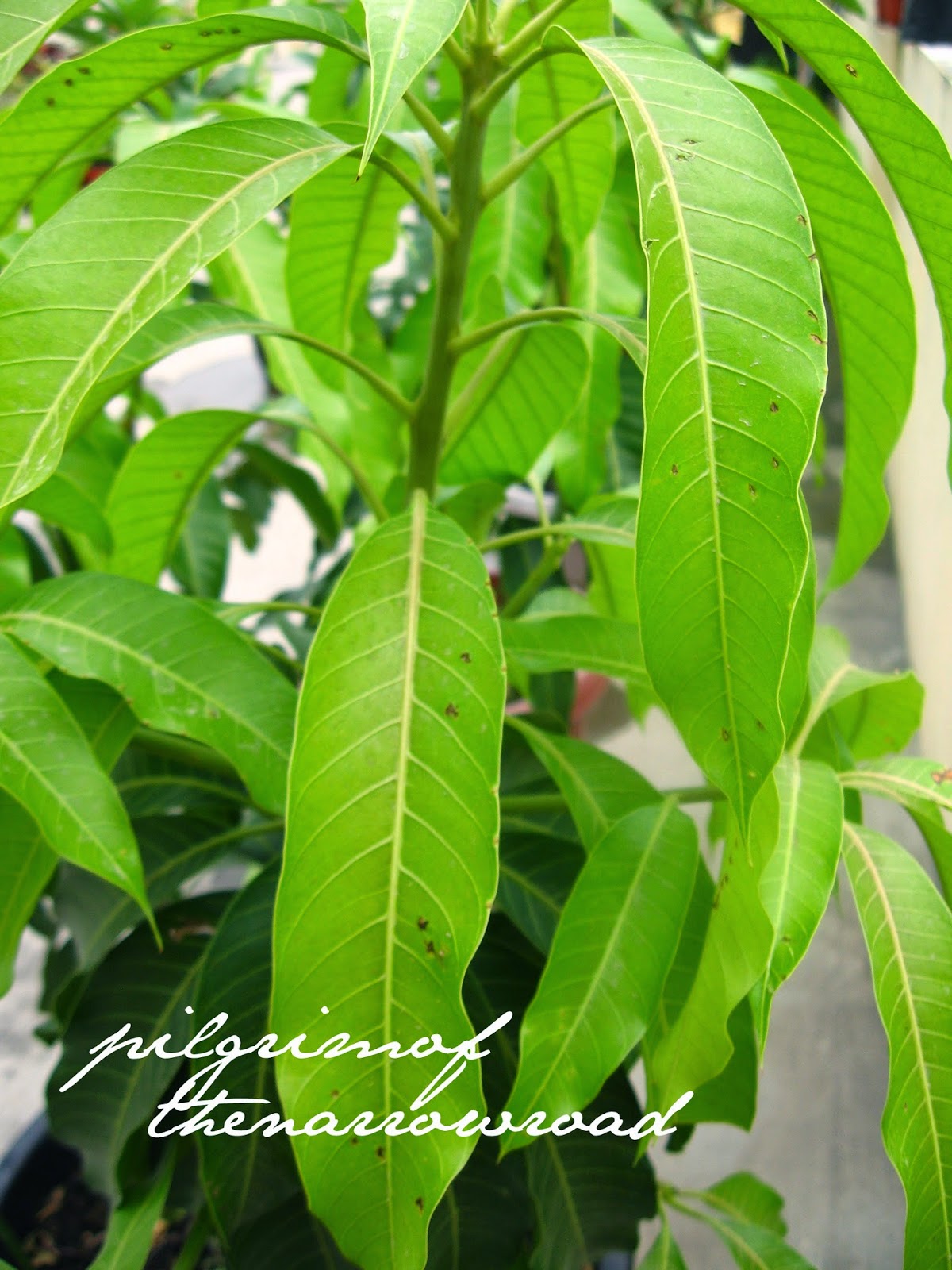
There's one thing I should warn you when buying mango trees in pots from any nursery, you should be careful to inspect the tree prior to purchase because plants in the nursery are prone to pests and diseases. Just like my experience with this tree. When I bought it I had spotted some brown spots or bumps on the leaves. I thought, by cutting the contracted leaves off would solve the problem, but it didn't. Every other day, I find new leaves with these spots/bumps, mostly on younger leaves. These spots/bumps are actually caused by the mango leaf gall midge (Procontarinia Matteiana), also called mango leaf curl midge. It can cause yield loss up to 70% and low quality fruit. Mango leaf curl midge lay eggs into the leaf tissue that softens and blisters. The spots become red and galls form shortly in 7 days. The galls grow up to a size of 3-4 mm. When matures, the adult galls emerge from the lower side of the leaves. 


To control this pest, we can prune the highly infested leaves and burn them and clean the tree floor off the infested leaves to avoid the insects move into the soil and pupate. Ploughing the orchard to expose the pupae to sun so it will die. As for botanical control we can mix 30 ml neem oil with 1 ltr of soapy water, shake well and spray. 

You may notice that the leaves have holes in it as the result of my piercing the spots/ galls before the spots/galls turn into insect. But I don't suggest this to you since it will reduce the leaf photosintetic area and affect the tree growth.


Saturday, November 1, 2014

Finally my FIRST Mangoes!!


 I bought my first mango tree from a local nursery last September 2013, it was less than 50 cm tall. It was a grafted tree of a local species called Harum Manis (literally translated into Sweet & Fragrant). I asked the guy at the nursery, how long would it take to start fruiting. And he answered about a year! I could hardly believe him, a dwarfie tree like this would fruit in a year? I just smiled and thanked him.


Later at home, I searched the internet, and to my surprised, the source said that at least it takes 3 years for a grafted mango tree to start setting flowers and fruit. To be honest, I was a little disappointed. Though I didn't buy what he said, but I somehow really wanted it to be true... :-D


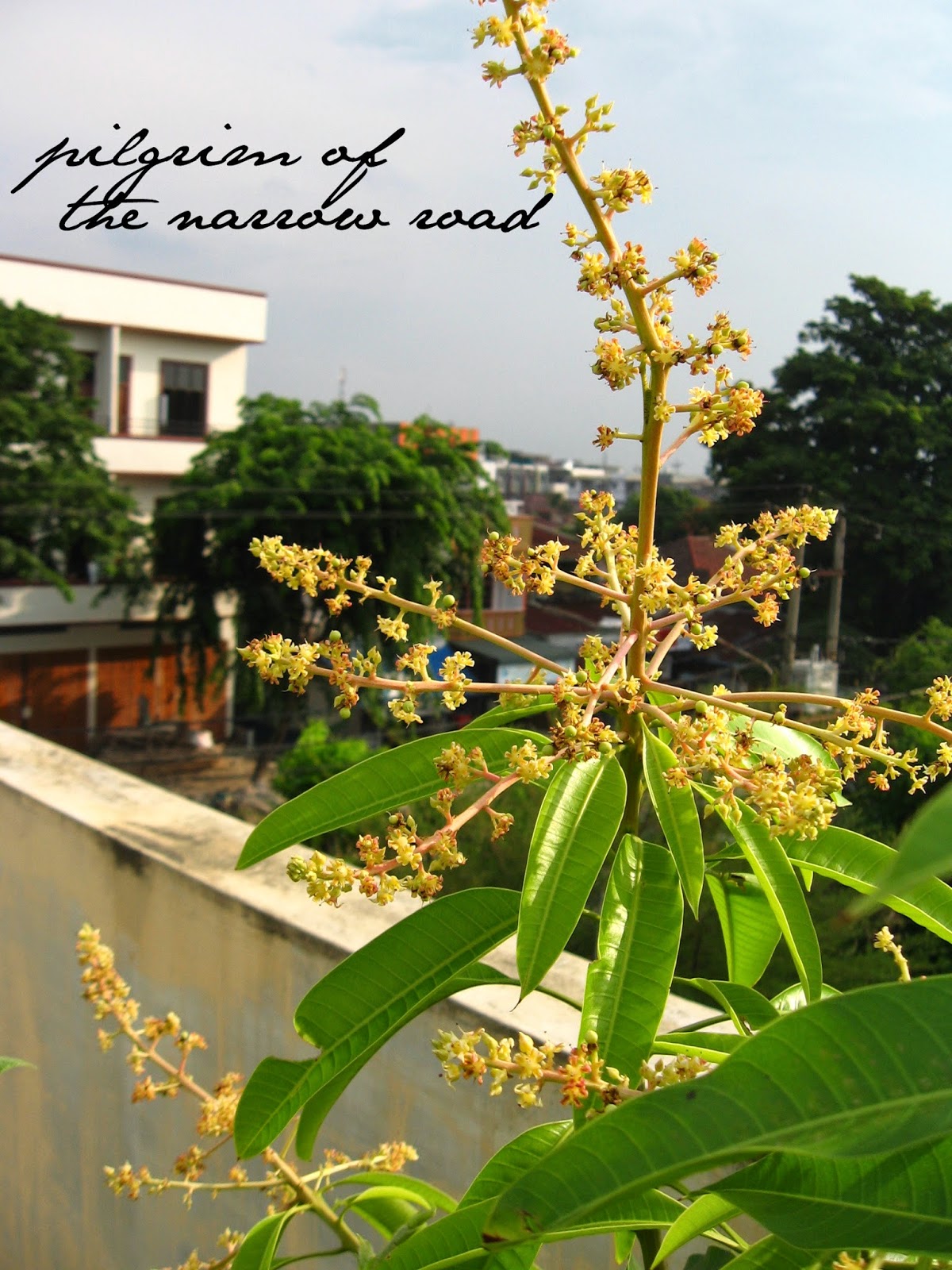
My mango tree continued to grow and got taller. So one day in spring, when my mango tree started to grow unsual shoots, I was very intrigued. I wait and voila! It set flowers!! Just in about 7or 8 months! My jaw dropped! The guy was RIGHT!! Yippie!!


Since mango doesn't need a hand pollination, I let the nature do it's job. The wind, the insects, everyone was busy doing the task for me! It sets hundreds of small flowers and many I believe got pollinated, but in the end the nature will also screen those which are not well-pollinated. They will eventually dropped from the trunk.

The monsoon period in the Summer brought a lot of rain and high speed wind. That caused many of my baby mangoes to drop since the pot sat in the way of the wind. That's a very hard lesson to learn. Any fruit trees shouldn't be exposed to a lot of wind (especially strong one). It will cause a lot of stress for them and will cause the fruit to be aborted by accident. So, I move it instantly to a spot where it is more protected from strong wind.


Only 5 mangoes survived this season, but it was already amazing given the size of the pot which is only size 5.


Related Posts Plugin for WordPress, Blogger...